
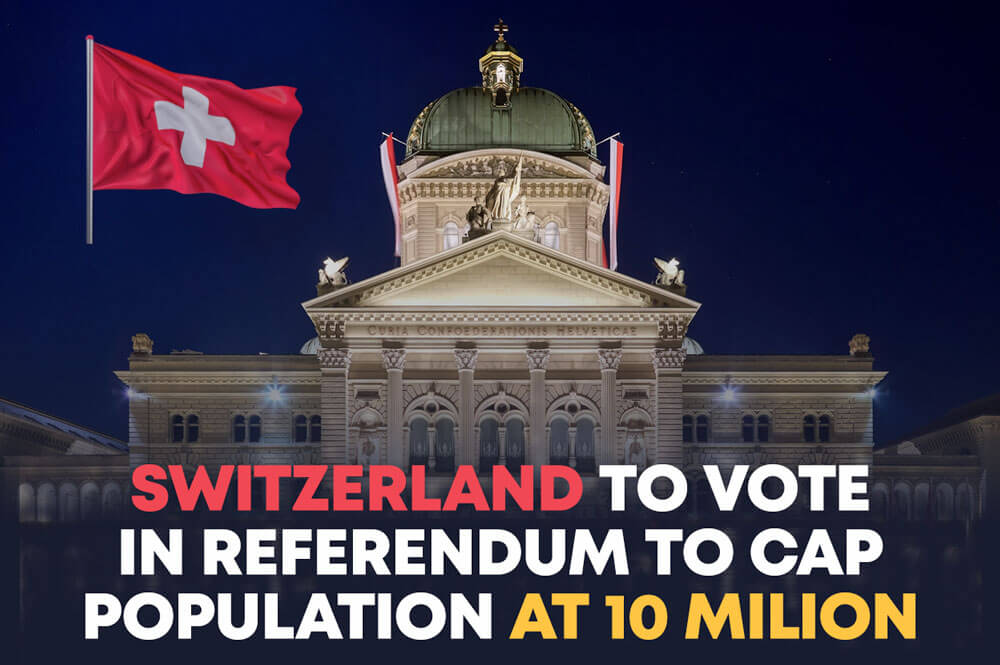
Switzerland’s upcoming referendum has sparked an important debate that goes beyond numbers. It touches on sustainability, national capacity, infrastructure pressures and the long-term direction of a country’s economic model.
While Switzerland’s realities differ from Malta’s, the underlying question is one we too must confront: what kind of growth do we want for our country?
Malta is already one of the most densely populated countries in Europe. We feel the pressures on housing, traffic, public services and quality of life. However, I do not believe the solution lies simply in placing a numerical cap on population.
For Malta, the real solution lies in transforming the structure of our economy.
The discussion should not be framed around limiting people, but around elevating productivity, raising skill levels and strengthening our national capacity.
For years, Malta’s growth model has relied heavily on expanding the labour force. This has brought economic momentum, but it has also exposed structural weaknesses. If we are serious about reducing dependency on foreign labour in lower-value roles, we must invest decisively in quality human capital.
This means accelerating our national transition toward AI, automation, robotics, advanced manufacturing, cybersecurity, medtech and high-value digital sectors. A smaller, highly skilled workforce equipped with technological tools can generate significantly greater output than a larger low-productivity one.
As someone who has consistently advocated for AI literacy, digital education and lifelong learning, I firmly believe education is the cornerstone of this transition. We must embed AI and digital skills from an early age, strengthen technical and vocational excellence at institutions such as MCAST and the University of Malta, and create flexible upskilling pathways for workers. Micro-credentials, industry-linked apprenticeships and advanced MQF programmes aligned with emerging sectors are not optional; they are essential.
At the same time, we must actively attract high-profile investment in niche, high-yield sectors.
Malta has already shown potential in areas such as film production, esports, fintech and innovation ecosystems.
We must now deepen that ambition. Strategic investment in medtech research, AI development, robotics in industry and digital creative sectors will create quality employment and raise wage levels, while reducing the need for large volumes of lower-skilled labour.
This transformation also requires a mentality shift.
Growth cannot continue to mean simply “more people equals more output.”
Sustainable growth must mean higher productivity, smarter systems, better infrastructure planning and a stronger knowledge base. Legislative frameworks must support innovation while safeguarding social cohesion. Public policy must reward technological adoption, research and enterprise that generates real value for Malta and its people.
The Swiss debate reminds us that population growth, if not matched with productivity and infrastructure, creates tension.
For Malta, the strategic answer is not isolation but evolution.
We must move from a labour-intensive economy to a knowledge-intensive one. We must leverage AI, automation and technology not as buzzwords, but as practical tools to strengthen our national resilience.
If we raise the bar on skills, embrace automation, invest in education and attract quality investment, Malta can sustain economic growth without placing disproportionate pressure on our communities. The future of our country will not be determined by how many people we host, but by how well we prepare our people to lead in high-value sectors.
That is the strategic leap Malta must take — a leap grounded in AI, education, innovation and a clear vision that puts Maltese talent at the centre of our economic future.
“Malta’s future will not be secured by how many we bring in, but by how strongly we invest in our own people. When we raise our skills, embrace technology and dare to innovate, we do not fear growth — we shape it. The Malta of tomorrow must be built on quality, knowledge and courage.”