
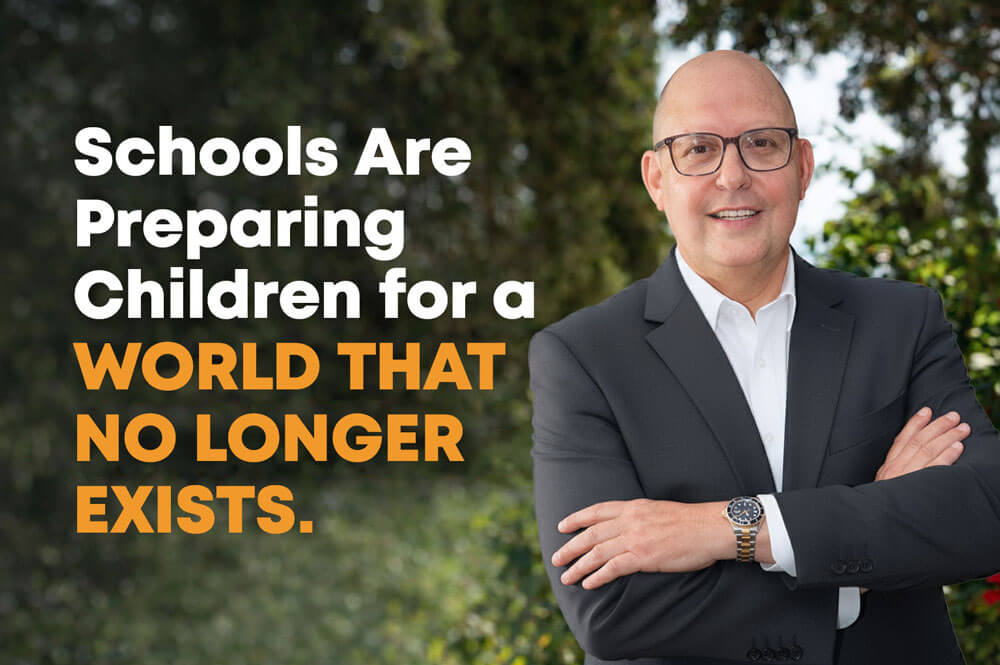
Across Europe — and certainly in Malta — a quiet but profound transformation is unfolding inside our classrooms. Artificial Intelligence is not just another technological trend. It is reshaping how knowledge is created, how work is organised, and how societies compete in the global economy.
Yet many of our education systems still resemble those designed for the industrial age.
For decades, education focused on memorisation, examinations and fixed career paths. But AI is dismantling that logic. In a world where machines can generate information, analyse data and even write code within seconds, the real value of education must shift toward human capabilities: reasoning, creativity, ethical judgement and adaptability.
Research and policy discussions across Europe increasingly emphasise the need for AI literacy among teachers and students, ensuring educators have the skills to integrate AI into their classrooms and help students understand the technology shaping their future. 
This is no longer optional.
Artificial Intelligence will redefine the labour market. Entire categories of routine work will disappear. At the same time, new professions — many of which do not yet exist — will emerge around data, automation, AI governance, digital health, robotics and human-machine collaboration.
The question is simple: are our education systems preparing young people for this reality?
As a Member of Parliament and someone who has spent decades working in ICT education, I often reflect on a fundamental truth: education policy is economic policy.
Countries that succeed in the age of AI will not be those with the largest populations or natural resources. They will be those with the most skilled people.
Malta understands this challenge. Our national vision for the coming decades places strong emphasis on digital skills, innovation and lifelong learning. We have already taken steps to integrate digital literacy, coding and emerging technologies into our education system.
But we must go further.
AI must not remain confined to specialised university courses or technology faculties. It must gradually become part of the learning experience across subjects — from science and engineering to business, healthcare, creative industries and even the humanities.
In the future classroom, Artificial Intelligence should not replace teachers. It should empower them.
AI can personalise learning paths, identify knowledge gaps, assist teachers in preparing lessons, and allow students to explore complex concepts through simulations and intelligent tutoring systems. Studies increasingly show that effective collaboration between teachers and AI systems can expand both teaching capacity and learning outcomes when used responsibly.
But technology alone is not the answer.
Education must also address the human side of this transformation: critical thinking, ethical awareness, resilience and social responsibility. These are the qualities that machines cannot replicate — and which will define the leaders of tomorrow.
In Malta, our opportunity is unique. As a small nation, we have the agility to adapt faster than larger systems. We can modernise curricula, invest in teacher training, and strengthen partnerships between education institutions, industry and government.
If we succeed, our children will not merely adapt to the AI revolution — they will help lead it. If we fail, we risk educating a generation for jobs that may no longer exist.
The future of work is being written today inside our classrooms.
And the decisions we make about education will determine whether Malta remains a country that follows change — or a country that shapes it.
In the end, education must prepare our children not just to use technology, but to lead the world that technology will create.
As I often say:
“Artificial Intelligence will change every profession. Our responsibility is to ensure that education changes first.”