
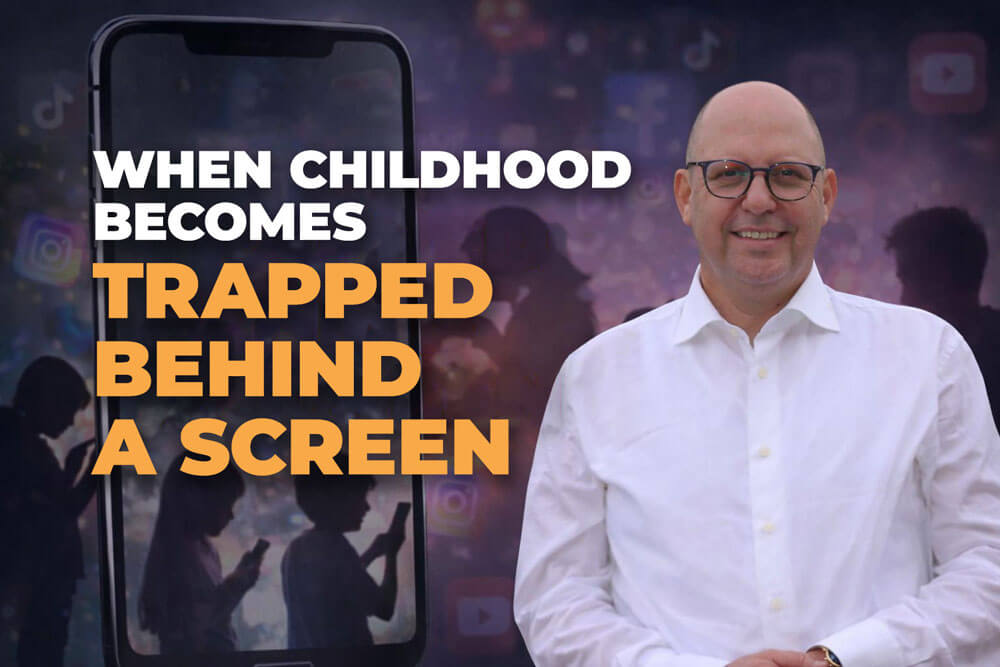
As a Member of Parliament, an educator and above all a father, I increasingly find myself reflecting on a worrying reality that many families are experiencing today. Our children are growing up in a world where the screen rarely switches off. Notifications never stop. Social media platforms compete constantly for their attention and increasingly shape how they communicate, think and spend their time.
I see this when speaking with parents in our communities, when meeting young people in schools and when listening to educators who witness these changes every day. Parents are worried. Teachers are concerned. And even many young people themselves are beginning to recognise that something is not quite right when so much of their life revolves around screens, platforms and constant digital stimulation.
The digital world has undoubtedly brought many benefits. It has opened access to knowledge, communication and creativity in ways that previous generations could never imagine. Yet we must also be honest about the darker side of this reality.
In the past, bullying often stopped at the school gate. Today it follows our children everywhere. Cyberbullying does not end when the school day finishes. It enters bedrooms through smartphones and tablets. It can happen at any time of the day or night. A humiliating post, a cruel message or a viral video can spread instantly and reach hundreds of people within seconds.
At the same time, many of the platforms that dominate young people’s lives today are intentionally designed to keep them engaged for as long as possible. Endless scrolling, short videos, constant notifications and algorithm driven feeds keep attention locked on the screen. Platforms such as TikTok and others have created digital environments that even adults struggle to step away from.
What concerns me even more is how this constant connection is gradually changing the way many children interact with the world around them. Screens are present at every moment of the day. Even when the phone is not directly in their hands, many remain connected through music, videos or other digital content through their earbuds. Earbuds are only one example of how technology can keep attention absorbed elsewhere, creating a kind of personal digital space where children and teenagers slowly become detached from the environment around them.
Many parents share similar experiences with me. They call their children and receive no answer because their attention is fully absorbed in a screen or digital content. Conversations at home are interrupted by notifications. Family moments are distracted by the constant pull of devices. Sometimes even simple interactions require repeating a question several times before a child lifts their eyes from the screen or pauses what they are listening to.
This is not simply about technology. It is about attention, presence and human connection.
As a father, I often reflect on how different childhood once was. Life moved at a slower and simpler rhythm. Children spent hours playing outdoors without thinking about phones or notifications. Friendships were built face to face. Silence existed. Boredom existed. And often it was in those quiet moments that creativity and imagination flourished.
Of course, we cannot simply return to the past. Technology is part of our lives and it will continue shaping our future. Artificial Intelligence, digital platforms and connectivity are realities that our children must learn to navigate.
But that does not mean we should accept every consequence without reflection.
This is why the national conversation currently underway on social media and young people is so important. I welcome the public consultation being led by my colleague Parliamentary Secretary Rebecca Buttigieg together with her steering committee. This discussion is necessary and timely.
However, consultation must lead to real action. Families are looking for guidance and leadership. Parents want practical solutions that help protect their children while still allowing them to benefit from technology in a healthy and balanced way.
Digital wellbeing must become a central part of our national conversation. It must begin in our homes, continue in our schools and be reflected in our national policies. Parents need support. Educators need tools. Young people themselves are increasingly aware that they cannot allow their lives to depend entirely on technology, social media platforms and artificial intelligence.
At the same time, we must recognise that responsibility cannot fall only on families. Technology companies and platform designers must also acknowledge the influence their systems have on the lives of young users.
As legislators, we must confront this reality with honesty and courage. The wellbeing of our children cannot be secondary to algorithms designed simply to maximise engagement.
This challenge concerns every family. It concerns parents, grandparents and educators who want children to grow in an environment where technology supports life rather than quietly taking control of it.
If we do not address this challenge seriously, we risk raising a generation that is constantly connected yet increasingly disconnected from real conversations, from meaningful relationships and from the world happening right in front of them.
The time has come for us to act not only as policymakers but also as parents and grandparents who recognise that childhood itself is changing before our eyes.
“Technology should help our children discover the world, not slowly replace the world around them.”